Checking the battery
A look-only check: terminals, corrosion, swelling or leaks. Charging and load tests at a shop.
This guidance is general — not checked for any one model. Your bike's exact figures and procedures are in its owner's manual or at an authorised service centre.
When to do it
- When starting is weak or lights dim
- After the bike has stood unused
What you need
- A screwdriver for the battery cover, if needed
Step by step
- 1
Keep the key off. Find the battery in the manual (often under the seat or a side cover).
- 2
Look for swelling, cracks, leaks or heat — if you see any, do not handle it.
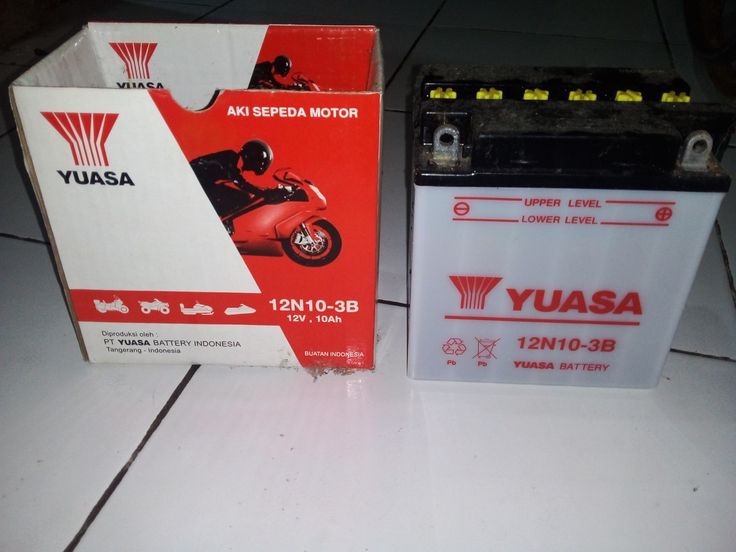
A refillable (conventional) battery has UPPER and LOWER marks. A sealed battery has none and must not be opened.Photo: SATELIT BM, CC BY-SA 4.0, via Wikimedia Commons - 3
Check both leads are tight on their terminals and look for white-green corrosion.

White-green corrosion on a terminal (shown on a car battery). If you see this on a bike, have it cleaned with the key off.Photo: MarkBuckawicki, CC0, via Wikimedia Commons - 4
If loose, tighten with the right-size tool; while working on one terminal, keep the tool from touching the other terminal or the frame.
Bridging the terminals with metal can spark, burn or start a fire.
- 5
Have it charged and load-tested at a battery shop or mechanic.
Warnings
- Do not open or add water to a sealed (maintenance-free) battery.
- Battery acid burns skin and eyes; if it touches you, rinse with plenty of water and get medical help.
- If removing it, follow the manual's order (usually negative off first and on last).
Stop and see a mechanic if
- The battery is swollen, leaking or hot
- Wiring is scorched or smells burnt
Sources
- The owner's manual and service booklet: the only reliable source for your bike's figures and procedures.
- The maker's warnings printed on the battery.
Last reviewed: 2026-10-25