Storing a bike you will not ride for weeks
The battery, fuel, tyres and rats — so it starts easily when you come back to it.
This guidance is general — not checked for any one model. Your bike's exact figures and procedures are in its owner's manual or at an authorised service centre.
When to do it
- When the bike will stand for several weeks or more
What you need
- A breathable bike cover
- A battery charger, if you have one
Step by step
- 1
Wash and dry it and lubricate the chain, so nothing rusts.

A dry, rusty chain — it is due for cleaning and lubrication.Photo: Devilal, CC BY-SA 3.0, via Wikimedia Commons - 2
Keep it somewhere dry and shaded, on the centre stand if it has one.

On the centre stand the rear wheel lifts clear and can be turned by hand. Not every bike has a centre stand.Photo: Ildar Sagdejev (Specious), CC BY-SA 4.0, via Wikimedia Commons - 3
Set the tyres to the manual's pressures; check them again when you return.
- 4
Battery: charge it now and then as the manual says, or disconnect the negative lead. While doing so, keep tools from touching both terminals.
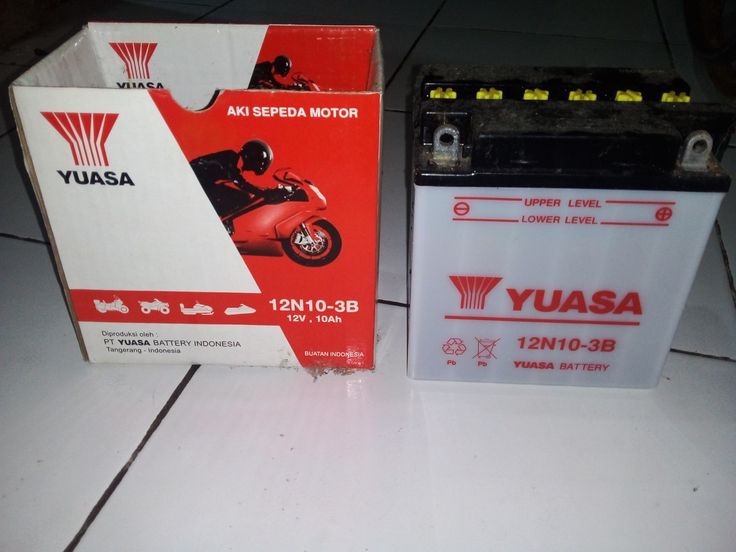
A refillable (conventional) battery has UPPER and LOWER marks. A sealed battery has none and must not be opened.Photo: SATELIT BM, CC BY-SA 4.0, via Wikimedia Commons - 5
What to do with the fuel (keeping the tank full, a stabiliser, and so on) — follow the manual or dealer; do not drain fuel yourself.
- 6
To keep rats off, leave no food nearby; you can cover the silencer and air-intake openings with mesh or cloth — remove them before starting.
Never start the engine with the openings covered.
- 7
Before riding again, do the pre-ride check and look for chewed wiring.
Warnings
- Never run the engine in a closed room — exhaust fumes are poisonous.
Stop and see a mechanic if
- It will not start on your return, or you find chewed wiring
Sources
- The owner's manual and service booklet: the only reliable source for your bike's figures and procedures.
Last reviewed: 2026-10-25